Top-Opening Lid Supports and Systems
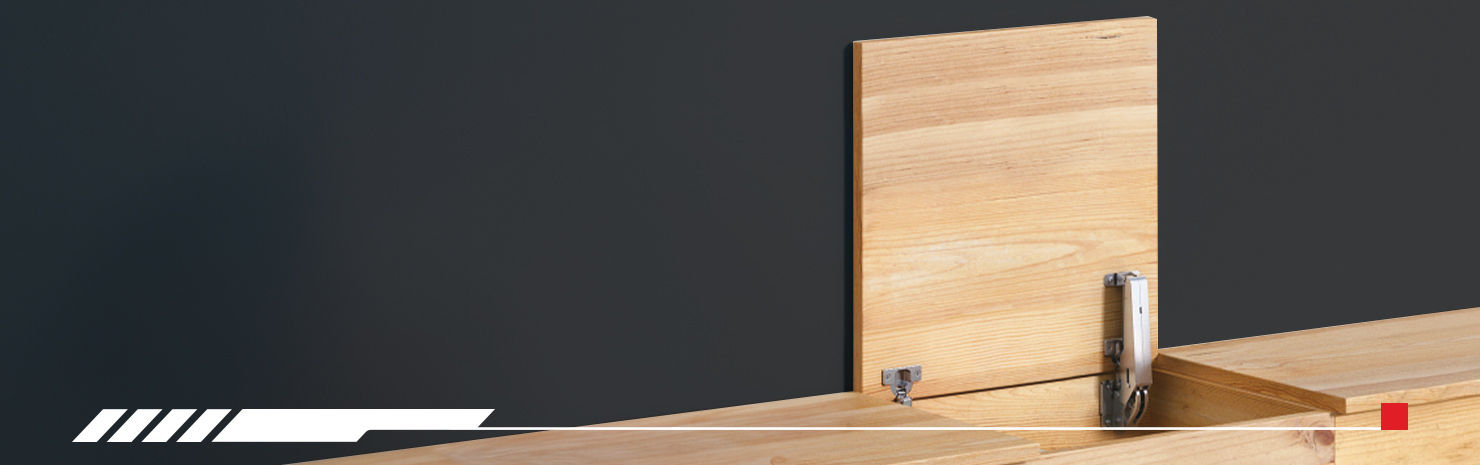
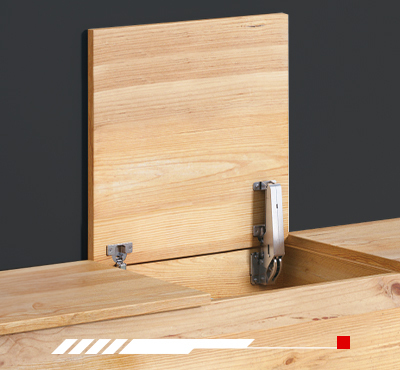
These lid stay hinges are commonly specified in storage chests, cabinetry, furniture, and equipment enclosures, where lids must remain open without manual support. Many models incorporate soft-closing toy box hinge functionality, reducing closing speed to improve safety and minimize wear.
For assistance selecting the appropriate lid stay hardware, consult with Sugatsune to match performance requirements with your application.
Engineered for Load Control, Safety, and Repeatable Performance
Sugatsune’s top-opening lid stays are designed to manage lid weight, motion control, and cycle durability in both residential and high-use environments.
Many models feature soft down lid support mechanisms, which regulate closing speed to prevent sudden impact. This is particularly important in applications such as toy box lid support systems and heavy wooden chests, where safety is a primary concern.
For larger or heavier lids, lift-assist lid support hinges reduce the force required to open the lid while maintaining controlled movement throughout the cycle.
To ensure proper performance, lid stays must be selected based on torque:
T = (W x H)/2 or ½ x W x H
Where:
- T = Torque Moment
- W = Lid weight (including hardware)
- H = Lid height measured from the hinge side
Matching the correct torque range ensures stable hold-open performance, controlled closing, and long service life.
Key Performance Considerations for Top-Opening Lid Stays
When specifying lid stay hinges, consider:
- Torque requirements based on lid size and weight
- Soft-close performance for safety and durability
- Lift-assist functionality for heavier lids
- Opening angle and hold-open stability
- Mounting configuration and hinge compatibility
- Cycle life for frequent-use applications
The following comparison outlines common top-opening lid stay configurations and their typical applications:
|
Type |
Best For |
Key Benefit |
Consideration |
|
Soft-Closing Lid Stays |
Toy boxes, residential furniture |
Safe, controlled closing |
Must match torque to lid weight |
|
Large or thick lids |
High load capacity |
Requires accurate torque calculation |
|
|
Lift-Assist Lid Supports |
Heavy wooden chests, industrial lids |
Reduces opening force |
May require paired hinge selection |
|
Adjustable Lid Stay Hardware |
Variable applications |
Fine-tuned motion control |
Requires proper setup |
|
Standard Lid Stay Hinges |
General cabinetry |
Reliable hold-open function |
Limited damping features |
Application Versatility Across Architectural and Industrial Use
Top-opening lid stays are specified across a wide range of applications where safe access and controlled motion are required:
- Toy box lid support systems designed to prevent injury
- Heavy wooden chest lid stays for furniture and storage applications
- Outdoor kitchen storage and utility compartments
- Top-loading cabinets and equipment enclosures
- Desk lids and workspace compartments
These systems are often used alongside lid support hinges, which provide pivoting motion, while the lid stay controls movement and positioning.
For applications requiring downward motion instead, see downward-opening lid supports designed for controlled fall-front or drop-down access.
Available Configurations to Meet Application Requirements
Sugatsune offers a variety of lid stay hardware designed for different performance needs:
- Soft close lid support systems for quiet, controlled motion
- Heavy-duty lid stay hinges for larger or high-load lids
- Lift-assist mechanisms for improved usability
- Compact lid stays for space-constrained designs
- Adjustable configurations for fine-tuning performance
Each solution is engineered to balance load control, safety, and long-term durability.
FAQs
Do lid stays require additional hinge hardware?
Yes. Lid stays are designed to control motion and hold the lid open, but they do not replace standard hinges. Proper hinge hardware is required to provide pivoting movement and ensure the lid support hinges function correctly.
Are there different types of top-opening lid stays?
Yes. Options include soft-closing lid stays, heavy-duty lid support hinges, and lift-assist systems. The appropriate type depends on lid weight, size, and application requirements, with torque being the primary selection factor.
What are the advantages of soft-closing lid support hardware?
Soft-closing lid stays improve safety, durability, and user experience by preventing slamming. Controlled closing reduces wear on hinges and cabinetry while protecting users from injury, making them ideal for toy boxes, furniture, and high-use storage applications.